Search rankings improve from steady work in three areas rather than a rebuild: getting the site crawled and indexed properly, on-page basics like titles, headings and image alt text, and earning links worth having. Page speed, mobile layout and HTTPS sit underneath all of it, and tracking tells you which changes moved anything.
On this page ▾
- What SEO actually involves
- Getting your site crawled and indexed
- On-page elements and images
- Creating content worth ranking
- Keyword research
- Linkable assets and content partnerships
- Mobile-friendly design
- Site security
- Page speed
- Internal linking
- Building backlinks
- Local SEO
- Tracking and analysis
- Keeping up with SEO trends
- Further reading
- Putting it into practice
With so many websites competing for the same search positions, improving your rankings can feel like an uphill battle. The good news is that SEO does not require a complete overhaul to make progress. A focused approach, covering on-page SEO, off-page SEO and the technical foundations, can boost your website SEO and produce real gains in organic search over time.
This post covers the practical SEO tips, SEO strategy and free tools that matter most for search performance in 2026, from getting your site indexed correctly through to tracking your keyword rankings and measuring SEO success.
What SEO actually involves
Search Engine Optimisation (SEO) covers the techniques used to improve a website’s visibility in search engine results pages (SERPs). The goal is to help search engines understand your content well enough to match it to relevant user queries, and to give users a reason to click through and stay.
SEO is not purely about ranking higher. It is about being found by the right audience at the right moment. When done well, it builds brand awareness, establishes authority in your field and supports long-term growth without relying entirely on paid traffic.
In practice, SEO breaks into three areas that your SEO efforts should cover:
- On-page SEO covers what sits on each web page: title tags, the meta title, a good meta description, headings, image alt text and relevant keywords.
- Off-page SEO is about high quality backlinks and the domain authority earned from other websites that link to you.
- Technical SEO helps search engines crawl and index your site, so your ranking web pages show in the Google search results for the search terms your target audience uses.
Getting your site crawled and indexed
If Google has not indexed your site, it will not appear in search results regardless of how good your content is. Google can discover new pages on its own, but it is worth taking a few steps to confirm your site is being crawled correctly and to speed up the process.
Set up Google Search Console, submit your sitemap and check the indexing status of your key pages. Search Console will flag any pages that are blocked from crawling or have been excluded from the index, so you can investigate and fix them.
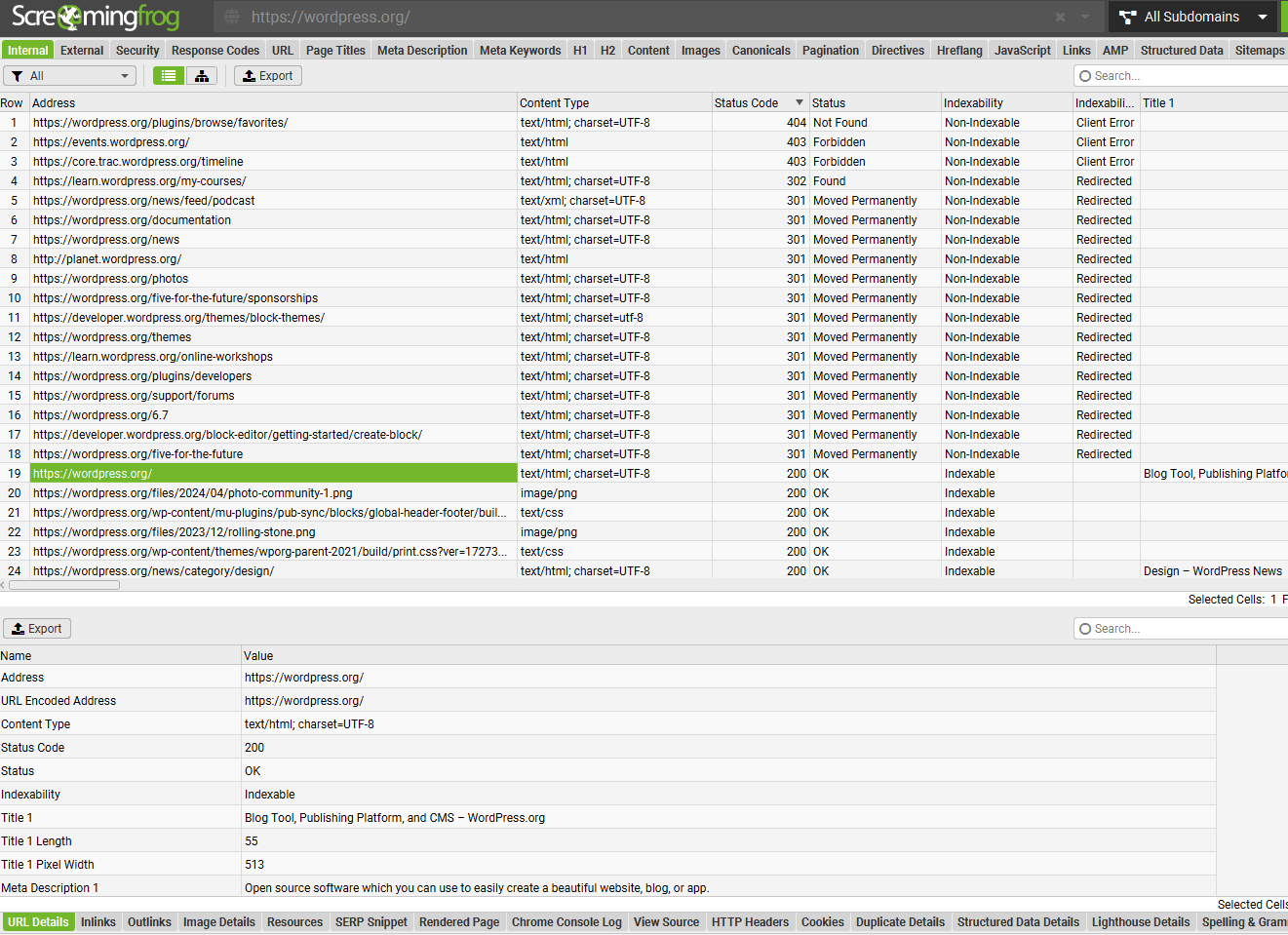
Use a tool like Screaming Frog to audit your site structure. It surfaces broken links, redirect chains and other issues that can prevent pages from being indexed or dilute the authority passed between them.
Keep an eye on Google’s Core Updates too. These can temporarily affect visibility, but sites that focus on delivering genuine value to users tend to recover or improve after each one.
On-page elements and images
On-page optimisation covers the elements within each page that help search engines understand what the content is about and help users decide whether to click. Getting these right is one of the more direct ways to improve rankings for specific keywords.
- Page titles. Keep them short and descriptive, with your primary keyword included naturally.
- URLs. Use clean, readable URLs that reflect the page content.
- Meta descriptions. Write these as a concise summary of the page. They do not directly affect rankings, but a well-written meta description improves click-through rates from search results.
- Heading structure. Use H1, H2 and H3 headings to create a clear content hierarchy that both users and search engines can follow.
- Images. Add descriptive alt text to every image and compress files before uploading. Large images are one of the most common causes of slow page loads, particularly on mobile.
Creating content worth ranking
Google’s stated aim is to surface content that best matches what a user is looking for at a given moment. That means the quality and relevance of your content matters more than any single technical factor.
Content that ranks well tends to share a few qualities. It is original, well-researched and covers a topic with enough depth to be genuinely useful. A 100-word article on a complex subject, such as how to install a LAMP stack on AlmaLinux, will not satisfy a user who needs step-by-step guidance. Thin content rarely holds its position.
Incorporate your target keywords naturally throughout the body text, but write for the reader first. Visual elements, including images, videos and infographics, improve engagement and can help explain complex ideas more clearly than text alone.
Google’s E-E-A-T framework (Experience, Expertise, Authoritativeness and Trustworthiness) is worth understanding. It is not a direct ranking signal in the way that backlinks are, but it reflects the qualities Google’s quality raters look for when assessing content. Demonstrating genuine expertise and citing credible sources strengthens your content’s credibility over time.
Keyword research
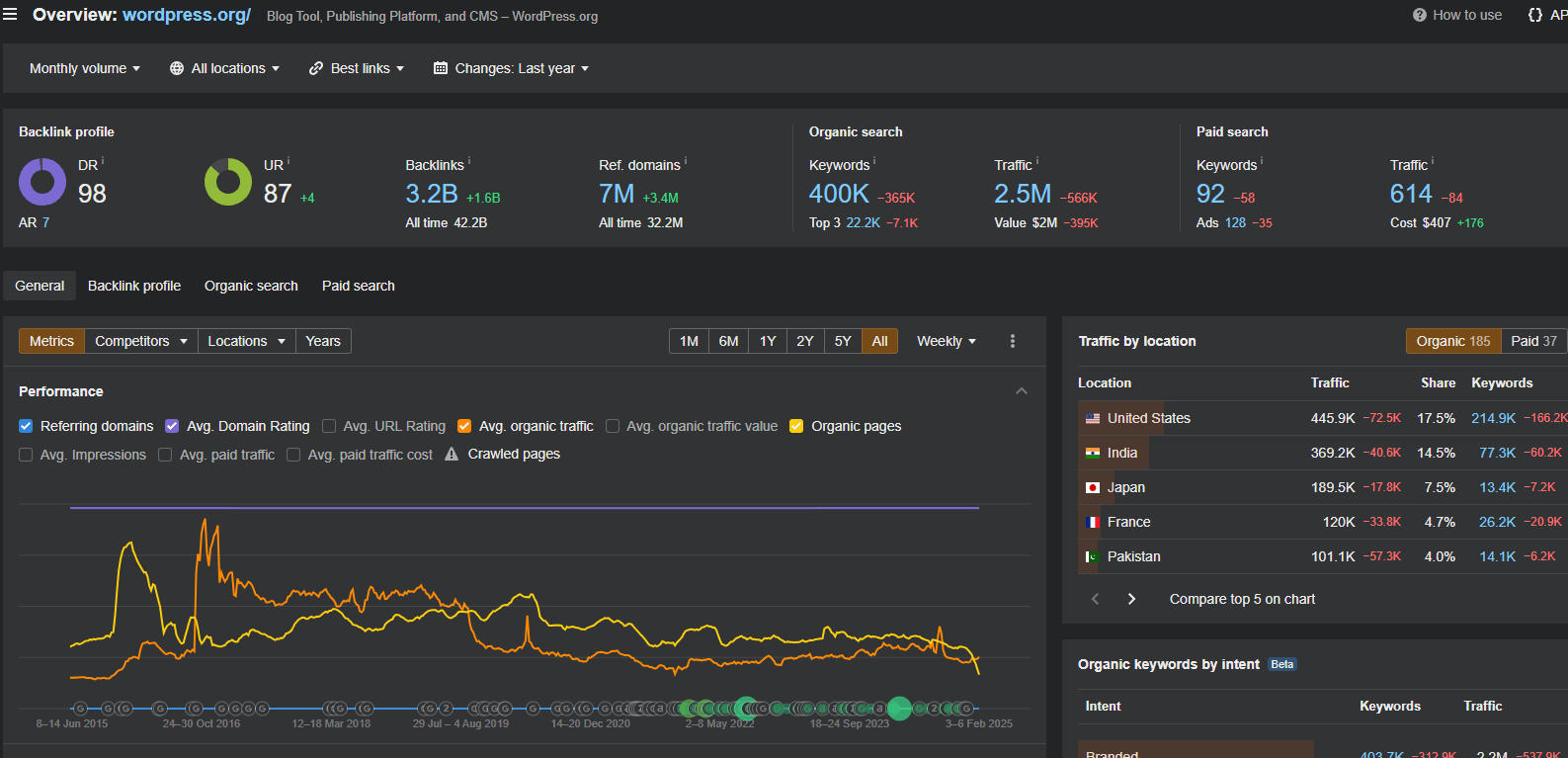
Understanding how your audience searches for information is the starting point for any content strategy. Keyword research tools like Ahrefs and SEMrush show you which terms people are using, how often they search for them and how competitive those terms are.
Long-tail keywords are longer, more specific phrases that typically have lower search volume but also less competition. They tend to attract users who are further along in their decision-making, which often translates to better engagement and conversion rates.
Search intent matters as much as search volume. Keywords generally fall into four categories: informational (the user wants to learn something), navigational (they are looking for a specific site), transactional (they want to buy or sign up) and commercial investigation (they are comparing options before making a decision). Matching your content type to the intent behind a keyword improves both relevance and conversions.
Linkable assets and content partnerships
Linkable assets are pieces of content that other sites are likely to reference and link to. Infographics, original research, in-depth guides and interactive tools all tend to attract links more reliably than standard blog posts, because they offer something that is harder to replicate elsewhere.
Content partnerships, such as guest posts or joint webinars with other organisations in your field, extend your reach and build credibility. When reputable sites link to your content, it signals to search engines that your site is a trustworthy source, which feeds into your overall authority.
Mobile-friendly design
Google uses mobile-first indexing, meaning it primarily uses the mobile version of your site when deciding how to rank it. If your mobile experience is poor, your rankings will reflect that regardless of how well your desktop version performs.
The practical steps to address this include:
- Responsive design. Your layout should adapt cleanly to different screen sizes without requiring a separate mobile site.
- Page speed on mobile. Mobile connections are often slower than desktop, so performance matters even more on smaller devices.
- Navigation. Menus, buttons and links should be easy to tap. Intrusive pop-ups that cover content on mobile can also attract a Google penalty.
- Lighthouse testing. Google’s Lighthouse tool (available in Chrome DevTools) audits your site for mobile performance, accessibility and best practices.
Site security
A secure site ranks better and builds more trust with visitors. HTTPS has been a ranking signal since 2014, and browsers now actively warn users when they land on an unencrypted page, which damages both credibility and conversion rates.
Beyond the SSL certificate, the security measures that matter most for SEO are those that keep your site online and free from malware. A compromised site can be removed from search results entirely. Key steps include:
- SSL encryption (HTTPS) to protect data in transit.
- Choosing a hosting provider with strong security practices.
- Keeping software, plugins and themes updated to close known vulnerabilities.
- Running regular security audits to catch issues before they escalate.
- Using two-factor authentication (2FA) on all admin accounts.
Page speed
Google’s Core Web Vitals made page speed a formal ranking factor. Faster pages reduce bounce rates, improve user experience and tend to hold higher positions in competitive search results.
The most impactful changes you can make are:
- Compress images before uploading, and use modern formats like WebP where supported.
- Reduce unnecessary scripts and plugins that add to page weight without adding value.
- Enable browser caching and lazy loading so returning visitors and below-the-fold content load faster.
- Use a Content Delivery Network (CDN) to serve assets from servers closer to your visitors.
- Upgrade your hosting if your server response times are consistently slow. A dedicated server or VPS removes the resource contention that shared hosting can introduce.
Internal linking
Internal links help Google understand the structure of your site and the relationship between pages. They also pass link equity (the ranking value associated with a link) from well-established pages to newer ones, and they keep users moving through your content rather than leaving after a single page.
Link to relevant pages naturally within your body text, using descriptive anchor text that reflects what the linked page covers. Breadcrumb navigation is a useful addition for larger sites, helping users understand where they are within the site hierarchy and giving search engines a clearer picture of your content structure.
Building backlinks
Backlinks from authoritative, relevant sites remain one of the strongest signals in Google’s ranking algorithm. A single link from a well-regarded publication in your field carries more weight than dozens of links from low-quality directories.
Effective approaches to building a strong backlink profile include:
- Guest posting on relevant platforms in your industry.
- Creating shareable assets such as original research, infographics or detailed guides.
- Digital PR, pitching stories or data to journalists and publications likely to cover your topic.
- Broken link building, finding outdated links on other sites and offering your content as a replacement.
- Industry forums and communities, where genuine participation can generate referral traffic and occasional links.
Quality matters more than quantity here. Spammy links or link schemes can trigger a manual penalty from Google, which is far harder to recover from than a slow start.
Local SEO
If your business serves a specific geographic area, local SEO determines whether you appear when nearby customers search for what you offer. The principles overlap with general SEO, but there are a few tactics specific to local search.
- Google Business Profile. Claim and keep your listing updated with accurate opening hours, contact details and photos.
- Local citations. List your business on relevant local directories. Consistent NAP (Name, Address, Phone number) information across all listings strengthens your local relevance signals.
- Locally relevant content. Pages or posts covering local events, news or community topics can rank for searches that broader national content will not.
- Location-specific keywords. Include your city or region in page content and meta tags where it fits naturally.
- Local backlinks. Links from other local businesses, community organisations or regional press carry particular weight for local search rankings.
Tracking and analysis
SEO work without measurement is guesswork. Google Analytics and Google Search Console together give you a clear picture of how your site is performing: which pages are attracting traffic, which keywords are driving clicks, where users are dropping off and which pages have high bounce rates that might indicate a content or experience problem.
Use that data to inform what you do next. If certain keywords are already driving traffic, look for related topics you have not covered yet. If a page has a high bounce rate, review whether the content actually matches what someone searching that keyword would expect to find. The data rarely tells you exactly what to do, but it points you in the right direction.
Keeping up with SEO trends
Search algorithms change regularly, and the tactics that worked well two years ago may be less effective today. Staying informed about where SEO is heading helps you adapt before your rankings are affected rather than after.
The areas worth watching most closely right now are:
- Voice search. Conversational queries and long-tail keywords are increasingly important as more users search by speaking rather than typing.
- AI in search. Google’s AI-generated summaries at the top of results pages are changing how users interact with search results, and what it means to rank well for informational queries.
- Mobile-first indexing. This is not new, but sites that have not fully addressed their mobile experience are still being penalised for it.
- Video content. Video results appear prominently in many searches. Optimising video titles, descriptions and transcripts extends your reach into those results.
- Technical SEO. Regular audits to check crawlability, page speed, structured data and Core Web Vitals scores remain as relevant as ever.
Further reading
The posts and resources below cover specific areas touched on in this article in more depth.
- Core Web Vitals explained, covering Google’s page experience signals in detail.
- Free SEO tools for small businesses, for finding and testing the keywords worth targeting.
- Local SEO for UK small businesses, with practical steps you can apply straight away.
- Google’s SEO Starter Guide, the official reference for how Google approaches crawling, indexing and ranking.
Putting it into practice
SEO covers a lot of ground, but the fundamentals have not changed: make your site easy for search engines to crawl, create content that genuinely serves your audience, build authority through quality links and measure what is working. Doing those things consistently over time produces results that paid traffic cannot replicate.
Your hosting environment plays a role too. Slow server response times, downtime and poor security all affect how search engines perceive your site. If your current plan is holding your performance back, take a look at WordPress hosting from Unlimited Web Hosting or explore VPS hosting if you need more control over your server configuration.


